Tudor vs Rolex: same founder, same owner, half the price?
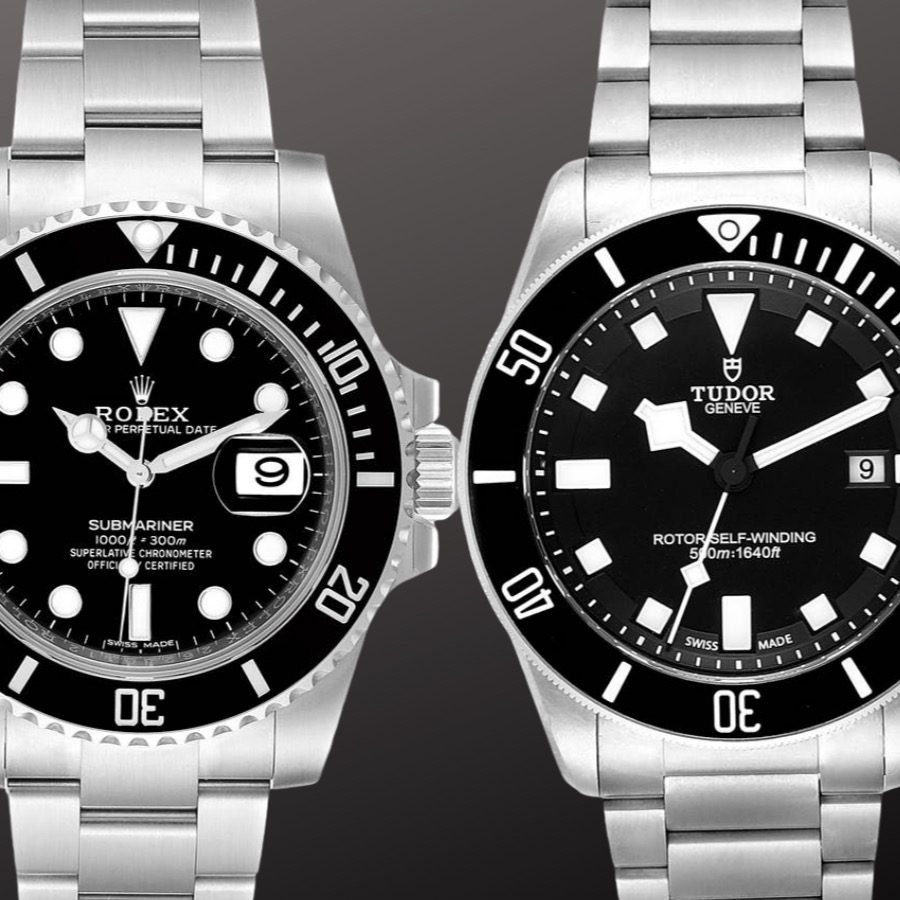
Tudor began as the cheaper sibling with Rolex cases and bought-in movements. Today it makes its own calibres in its own building. Here is how the two brands really compare, and what the gap looks like on two equivalent divers.
Tudor has long been called “the poor man's Rolex”. It was never quite fair, and today it is less accurate than ever. But the two brands do share a founder, an owner and a lot of history, so the comparison is worth making properly, with facts rather than slogans.
One founder, two names
Rolex founder Hans Wilsdorf did not create Tudor by accident. According to Tudor's own history, the trademark “The Tudor” was registered for him in February 1926 by a Geneva watch dealer, the house of Veuve de Philippe Hüther, which formally transferred it to him in 1936.
On 6 March 1946 he founded a separate company, Montres Tudor SA. His stated aim was a watch his agents could sell at “a more modest price than our Rolex watches”, while matching Rolex's dependability. Rolex guaranteed the technical side, distribution and after-sales service.
Both companies still sit under the same roof: the Hans Wilsdorf Foundation, a private Swiss foundation, is reported to be the sole owner of both Rolex SA and Montres Tudor SA.
Rolex outside, someone else inside
For decades, the formula was simple. Tudor used Rolex cases, crowns and bracelets, and fitted movements bought from outside suppliers.
The first Tudor Submariner, the 7922 from 1954, had a crown and bracelet signed Rolex. Later references, such as the 7928, had cases signed “Original Oyster Case by Rolex”. Inside, the movements came from Fleurier and, later, ETA: the 1960s Snowflake used an ETA 2483, and the 1989 Submariner 79090 used the ETA 2824-2. That was the whole price trick: Rolex robustness outside, a proven bought-in movement inside.
Gone, then back
Tudor's reputation faded, and it disappeared from some big markets. Rolex pulled the brand out of the United States, the United Kingdom and Japan, among others. Tudor Watch USA was set up in 2013, after a long absence. The UK return came on 19 September 2014, after about eleven years away, with 100 stores at launch.
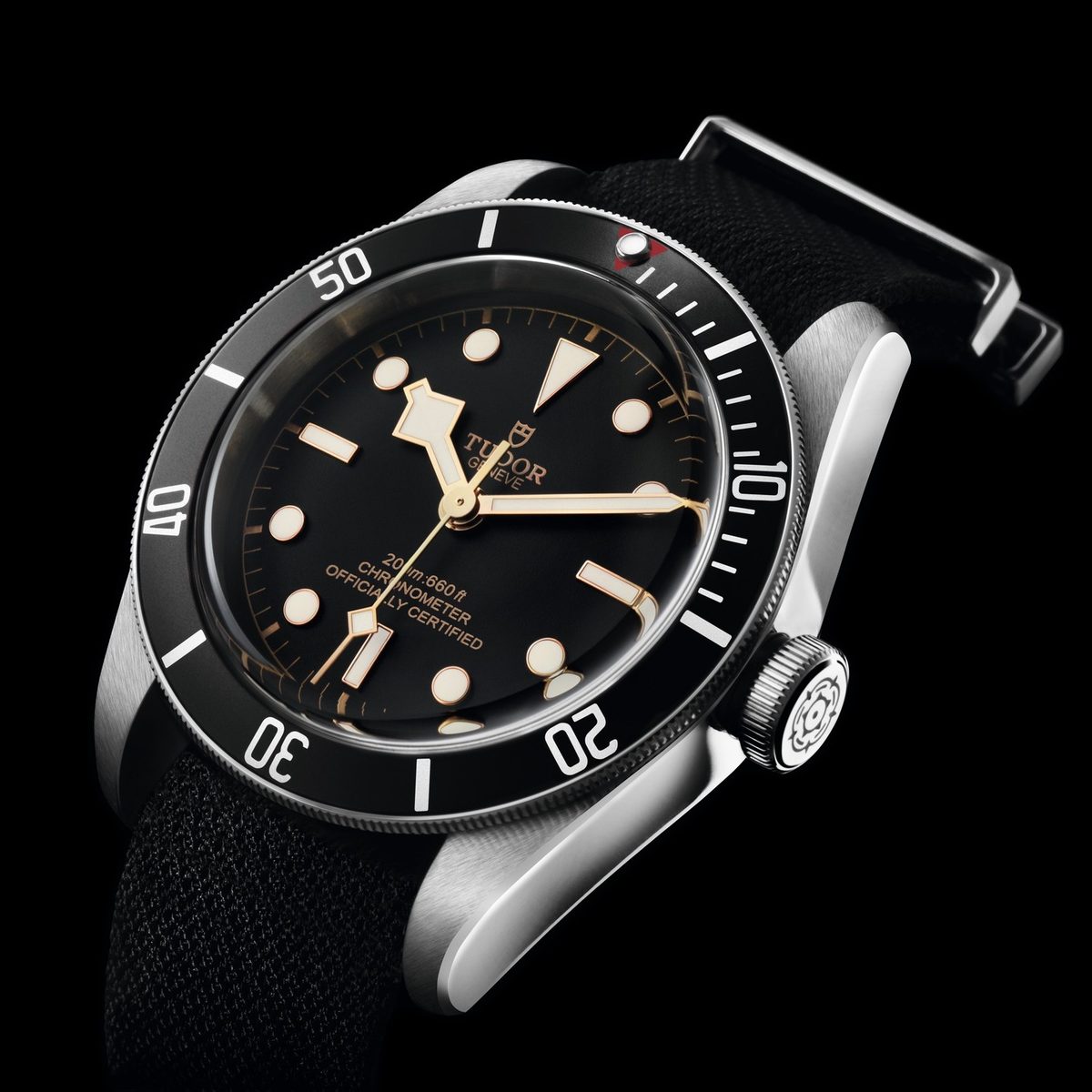
The comeback had a face: the Heritage Black Bay, shown at Baselworld in 2012. A 41 mm diver with a 200 m rating and design cues from the 1950s Tudor Submariners, it still ran on the ETA 2824.
From ETA to in-house
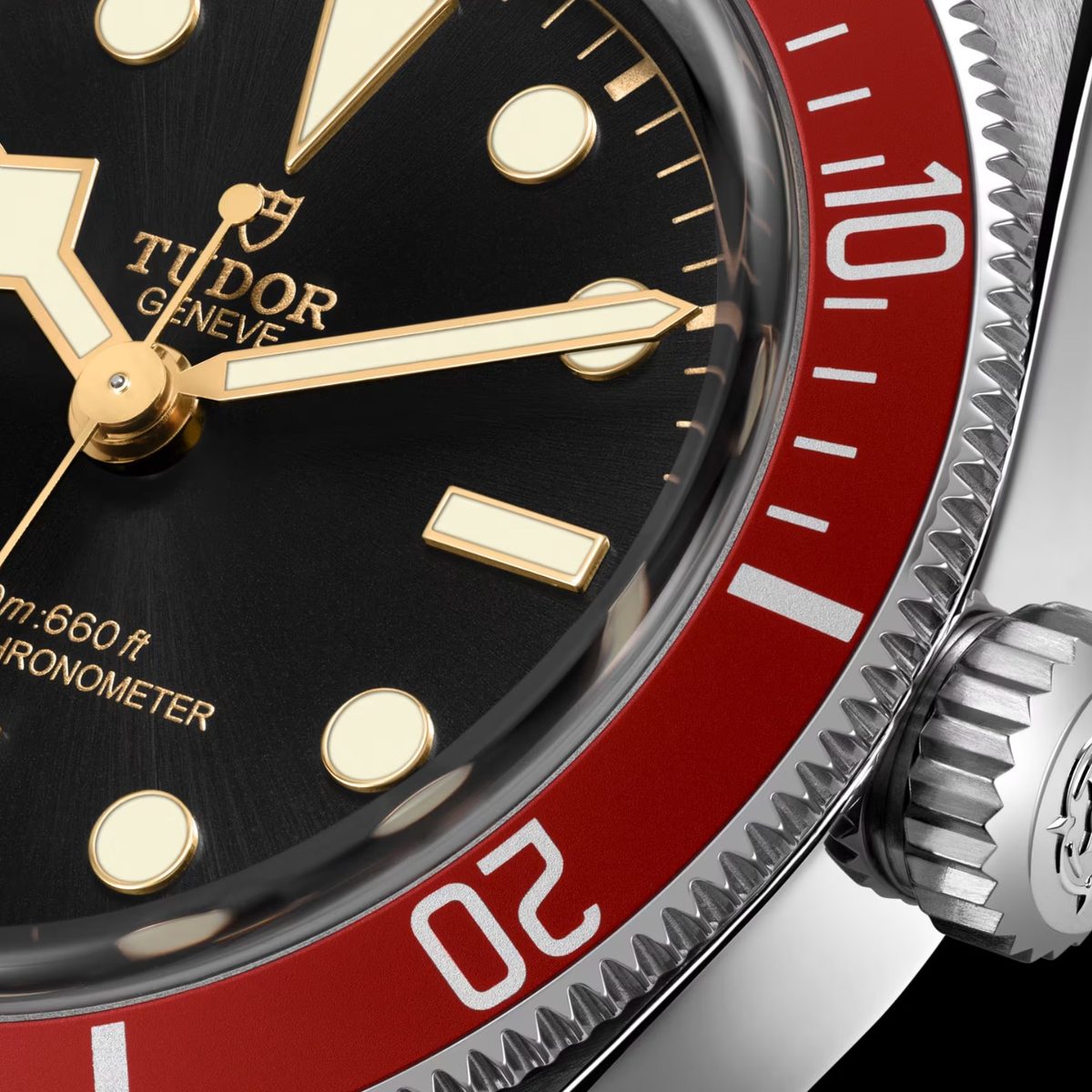
The real change came in 2015. Tudor presented its first in-house calibre, the MT5621, in the North Flag, and a close relative, the MT5612, in the second-generation Pelagos. The first Pelagos had used the ETA 2824. The new movement had a silicon hairspring, about three days of power reserve and chronometer certification.
In 2016 the Black Bay followed, swapping the ETA 2824 and its 38 hours of reserve for the in-house MT5602, with 70 hours.
Kenissi and Le Locle
Those movements are made by Kenissi, a manufacture Tudor founded in 2016 to produce calibres for itself and for other brands. Chanel took a 20% stake, announced in January 2019. Kenissi supplies, among others, Breitling, Chanel, Norqain, TAG Heuer and Fortis.
Tudor also left Rolex's shadow physically. It broke ground in Le Locle in 2018, the building was finished about three years later, and the manufacture was inaugurated in March 2023. It is Tudor's first production site separate from Rolex, and it is joined to Kenissi's.
Master Chronometer
In May 2021 the Black Bay Ceramic became Tudor's first watch certified as a Master Chronometer by METAS, the Swiss federal metrology institute. That test covers the whole watch, not only the movement: precision, magnetic resistance, water resistance and power reserve. Several current Tudors now carry it.
Black Bay 58 vs Submariner
The fairest pair today is the Black Bay 58 and the Rolex Submariner without date. Both are steel divers on a steel bracelet.
Tudor Black Bay 58, M7939A1A0NU-0001
- Case: 39 mm steel, 11.7 mm thick.
- Movement: in-house Manufacture Calibre MT5400-U, automatic.
- Power reserve: 65 hours.
- Water resistance: 200 m.
- Certification: COSC and METAS Master Chronometer.
- Price: 4,920 euros.
Rolex Submariner, reference 124060
- Case: 41 mm Oystersteel.
- Movement: in-house calibre 3230, automatic.
- Power reserve: about 70 hours.
- Water resistance: 300 m.
- Certification: Superlative Chronometer, Rolex's own standard of plus or minus 2 seconds a day after casing, on top of COSC.
- Price: 9,850 euros.
Prices are the euro prices shown on Tudor's and Rolex's websites when viewed from Spain in November 2026. The Tudor costs almost exactly half.
What the extra money buys at Rolex is a deeper water rating, a ceramic bezel insert instead of aluminium, a tighter accuracy promise and, above all, the name. On paper, the movements are closer than the prices suggest.
Our take
Tudor is no longer a Rolex with a cheaper engine. It has its own movements, its own building and third-party Master Chronometer certification on several models. The gap that remains is mostly about brand, finishing and resale, not about how well the watch tells the time.
If you want a Submariner, nothing else will do. If you want a well-made steel diver from the same family, the Black Bay 58 gives you most of it for half the price, and it has earned the right to be judged on its own terms.
Sources
Every fact in this article comes from the sources below. Spotted a mistake? Tell us on Instagram.
- Tudor: Tudor history: the origins, from 1926 to 1949 (opens in a new tab)
- Rescapement: Tudor Submariner: A Brief History (opens in a new tab)
- aBlogtoWatch: Tudor Watches To Return To US Market In 2013 (opens in a new tab)
- The Jewellery Editor: The Tudor watches dynasty returns to the UK after an exile of 11 years (opens in a new tab)
- Monochrome Watches: Tudor Heritage Black Bay ref. 79220R – Specs & price (opens in a new tab)
- SJX Watches: A Detailed Look at the New Tudor Pelagos, Featuring an In-House Movement (opens in a new tab)
- SJX Watches: Explaining What's New with the Revamped Tudor Heritage Black Bay (opens in a new tab)
- aBlogtoWatch: Chanel Takes Stake In Kenissi Manufacture With Ties To Rolex (opens in a new tab)
- Time+Tide: Tudor vs Rolex is no longer such a fanciful comparison and a visit to the new manufacture shows why (opens in a new tab)
- Fratello: Tudor Opens The Doors Of Its New Le Locle Manufacture (opens in a new tab)
- SJX Watches: Tudor Introduces the Black Bay Ceramic (opens in a new tab)
- DMARGE: Rolex's Secret Business Ownership Structure Behind Every Watch Ever Sold (opens in a new tab)
- Tudor: Black Bay 58, M7939A1A0NU-0001 (product page) (opens in a new tab)
- Rolex: Submariner, reference 124060 (product page, Spain) (opens in a new tab)