Tissot PRX: not a cheap Royal Oak, but a 1978 Tissot that came back
The PRX is the most talked-about steel sports watch under $1,000, and the one most often called a copy. Here is where it really comes from, what the name means and what it costs today.
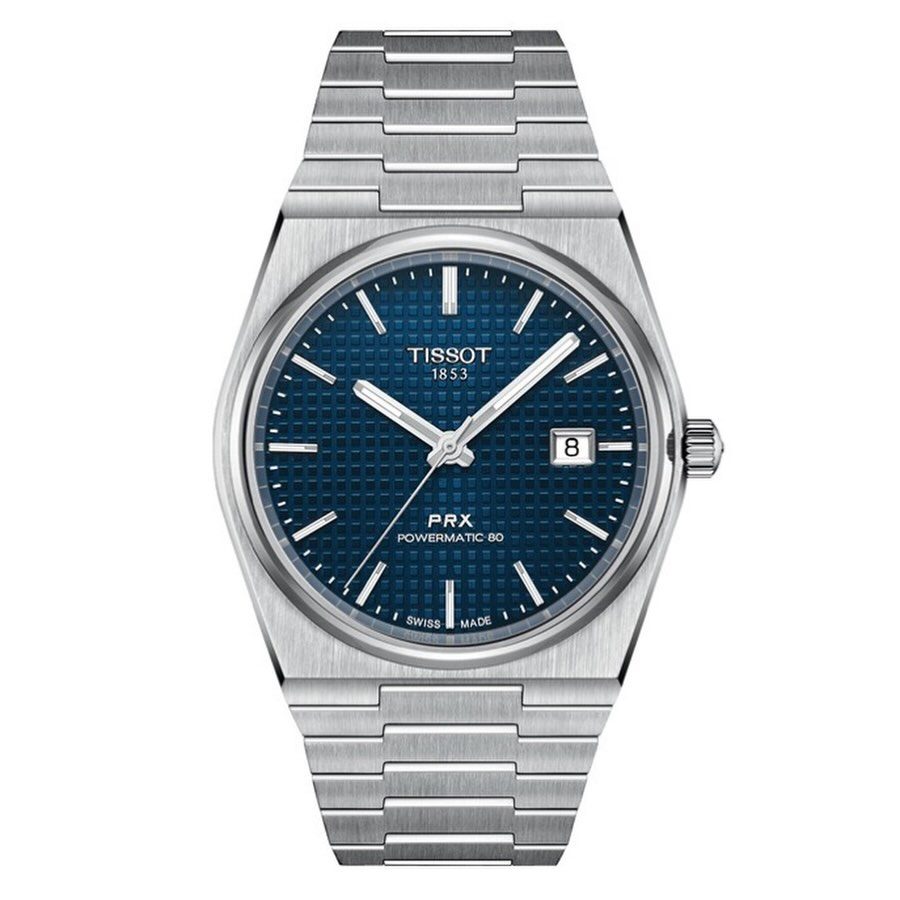
Few watches under $1,000 get talked about as much as the Tissot PRX, and few get explained so badly.
It is a steel sports watch with an integrated bracelet: there are no lugs, and the bracelet runs straight out of a flat, barrel-shaped case. Since its return in 2021 it has become a standard answer to “what should my first proper watch be?”. It is also the watch people are most sure is a copy of something else. The history says otherwise.
“A poor man’s Royal Oak”
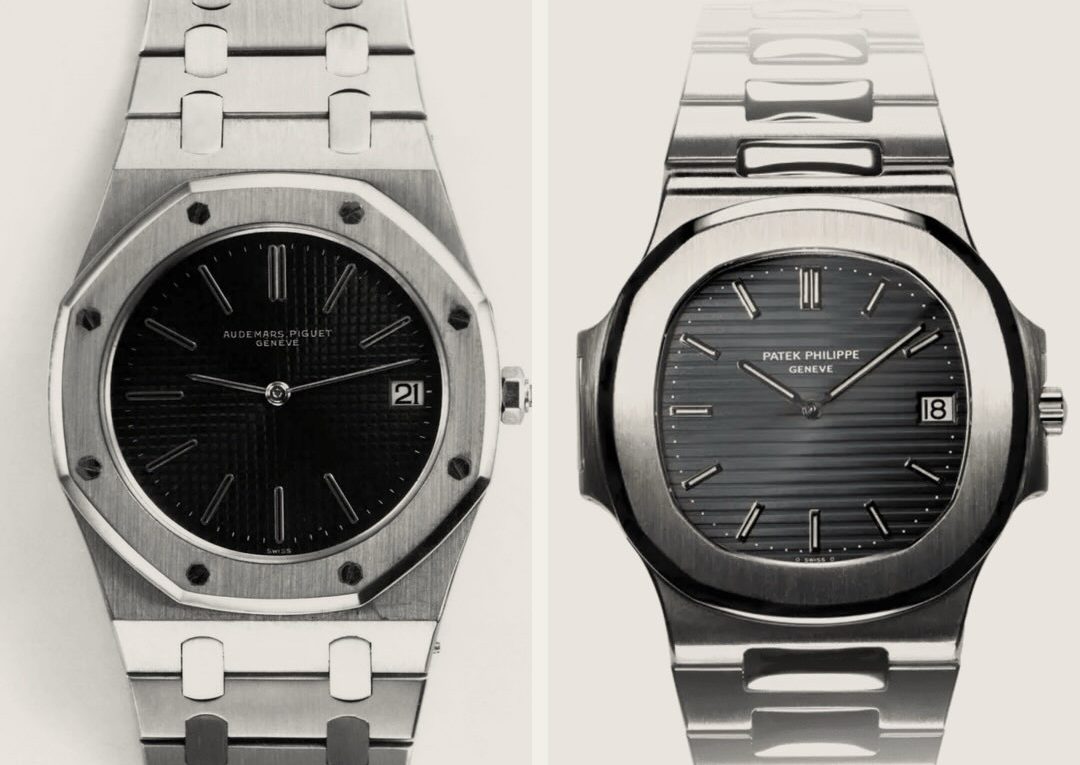
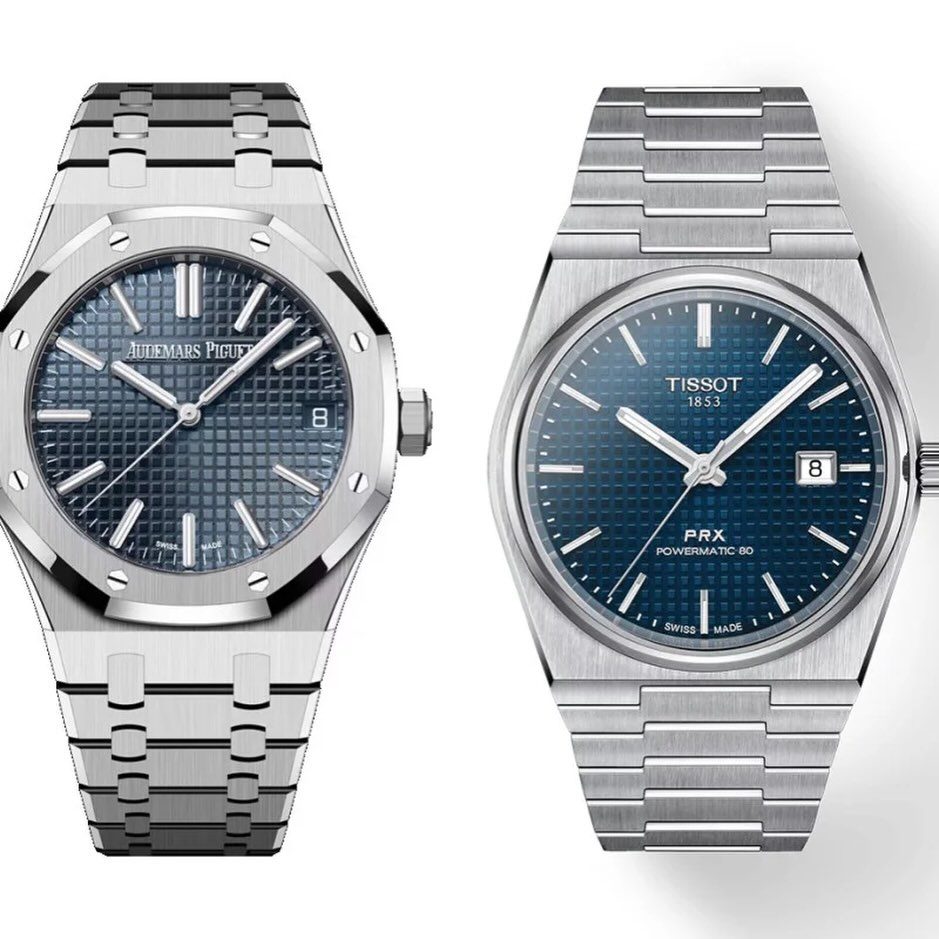
Post a photo of a PRX and someone will call it a budget Royal Oak. The comparison is not absurd.
The Royal Oak, designed by Gérald Genta for Audemars Piguet, came out in 1972. Genta’s Nautilus for Patek Philippe followed in 1976. Both are angular steel sports watches with integrated bracelets, and both shaped what came after.
The point is that it became a template. By the late 1970s, the steel sports watch with a built-in bracelet was a genre that many brands were working in, and Tissot was one of them. We will come back to Genta in a separate article.
Who Tissot is
Tissot was founded in Le Locle, in the Swiss Jura, in 1853. Its record is more inventive than its price list suggests:
- 1930: antimagnetic. Tissot is widely credited with the first antimagnetic wristwatch in series production. Monochrome dates an antimagnetic pocket watch to 1929, and Tissot itself just says “the 1930s”.
- 1951: the Navigator. Fratello describes it as the first automatic world-time wristwatch, showing local time and the other 23 time zones.
- 1971: the Astrolon. Also sold as Idea 2001: a mechanical watch whose movement was largely plastic. The barrel, balance and springs stayed metal. Watchonista reports it was a commercial failure.
- 1985: the RockWatch, with a case cut from Alpine granite.
- 1999: the T-Touch. Not a touchscreen in today’s sense: the sapphire crystal itself was touch-sensitive and gave access to functions such as a compass and an altimeter.
A brand that put a plastic movement and a granite case into production is not a brand short of its own ideas.
1978: the Seastar
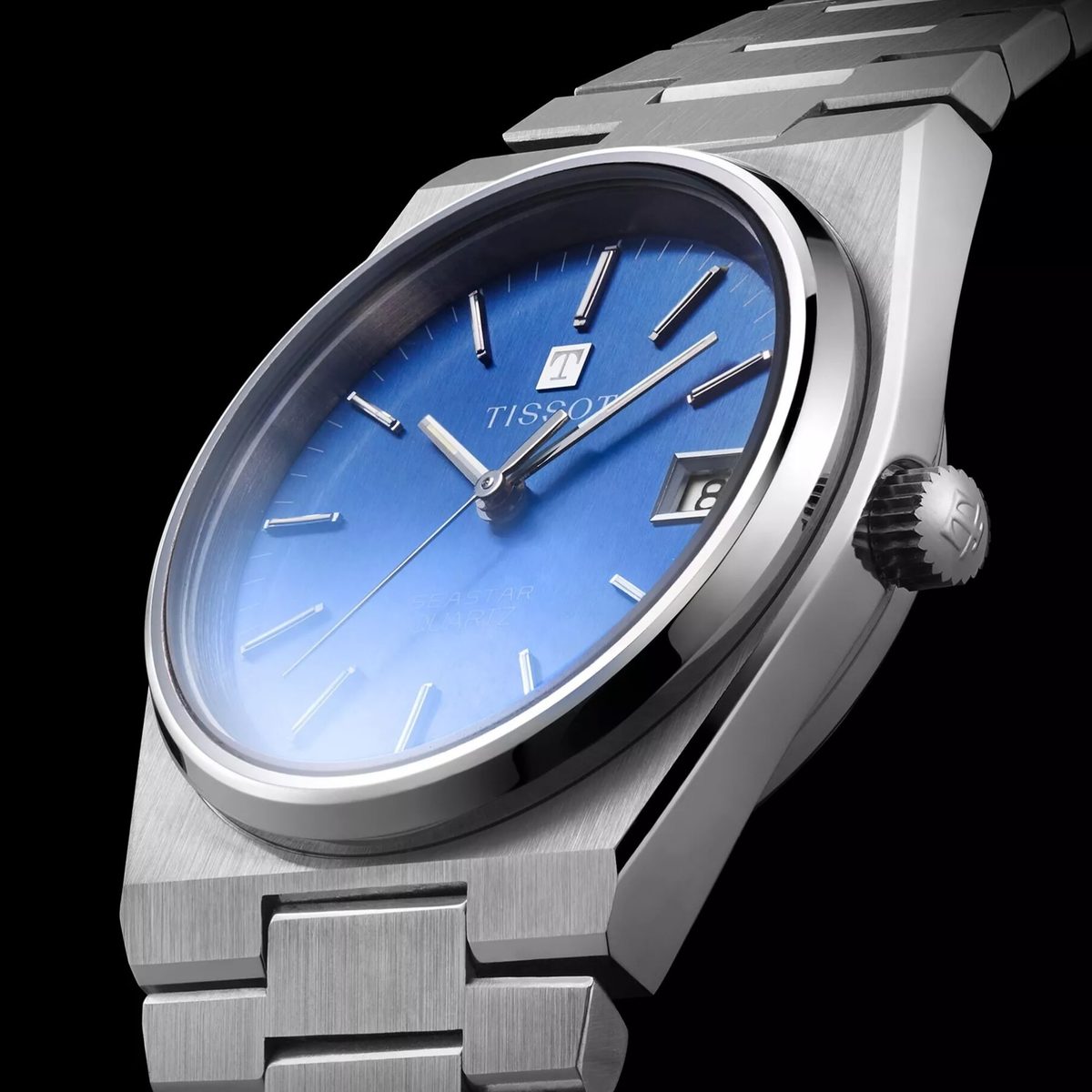
In 1978, six years after the Royal Oak, Tissot launched a quartz sports watch with a slim barrel-shaped case, a prominent bezel and an integrated bracelet with wide, flat links. According to Monochrome, it was sold as the Seastar, and the name PRX was registered later. Tissot’s own PRX page says the design first appeared in 1978 and that it was originally intended for women.
The caption of our Instagram post gave the 1978 reference as 40205. We could not confirm that. aBlogtoWatch calls the originals “1978 Tissot PRX 40 205” watches, but other launch coverage uses “PRX 40 205” only as the name of the 2021 model. We would rather leave the old reference open than repeat it.
What “PRX” means
It is less a name than a spec sheet. Tissot defines it by precision and robustness, with an X that refers to the 10 bar water resistance. Monochrome spells it out: P for precise, R for robust, X for 10 bar, the Roman numeral for ten.
The 2021 comeback
The PRX returned in early 2021 as a quartz watch at $375, 40 mm wide and 10.4 mm thick, with 100 m of water resistance and a sapphire crystal. The first batches sold out quickly, according to Watchonista.
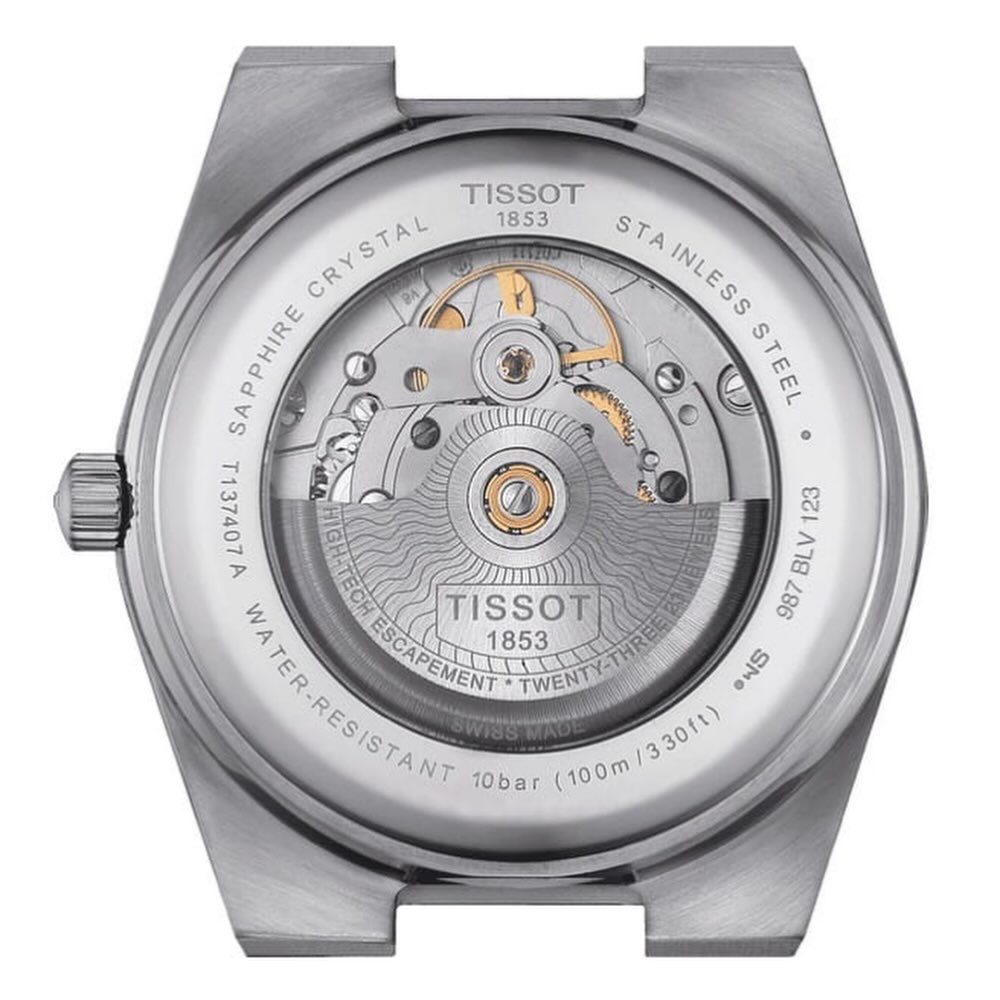
The automatic followed a few months later. Monochrome reported it at €650 for the black and blue versions, with the Powermatic 80 movement and its 80-hour power reserve, more than double that of a classic ETA 2824. It also brought the embossed waffle-pattern dial that fuels most of the Royal Oak comparisons.
What it costs now
As shown on Tissot’s official site in November 2026, for the 40 mm models on a steel bracelet:
- PRX quartz (T137.410.11.041.00): €395 in Spain, $450 in the United States. 10.4 mm thick.
- PRX Powermatic 80 (T137.407.11.041.00): €775 in Spain, $850 in the United States. 10.93 mm thick, 80 hours of power reserve.
Both have 100 m of water resistance and a sapphire crystal. Our Instagram post quoted $795 for the automatic; the US price is now $850.
Our take
The PRX does borrow from the 1970s language that Genta helped invent. So did half the industry, including Tissot itself, in 1978. Calling it a copy misses that it is a reissue of the brand’s own design.
Judged on its own terms, it is a well-finished steel watch with a sapphire crystal and a long power reserve, at a fraction of the price of the watches it gets compared with. If you like the shape, the automatic is the one to buy. If you just want the look, the quartz does the job for half the money.
Sources
Every fact in this article comes from the sources below. Spotted a mistake? Tell us on Instagram.
- Tissot: Tissot, a story that starts in Le Locle (opens in a new tab)
- Monochrome Watches: Tissot (brand page and history) (opens in a new tab)
- Fratello: The Best Vintage Tissot Watches (opens in a new tab)
- Watchonista: Tissot Astrolon: the synthetic revolution (opens in a new tab)
- Science Museum Group: Tissot synthetic Idea 2001 watch (collection object) (opens in a new tab)
- Sotheby's: Gérald Genta: The Most Visionary Watch Designer of the 20th Century (opens in a new tab)
- Tissot: A Universe of Its Own (PRX) (opens in a new tab)
- aBlogtoWatch: Watch Review: Tissot PRX (opens in a new tab)
- Watchonista: The Comeback Kid: A Closer Look At Tissot’s Relaunched PRX Collection (opens in a new tab)
- Monochrome Watches: Tissot PRX 40 205 Powermatic 80 (review and price) (opens in a new tab)
- Tissot Spain: Tissot PRX 40mm T137.410.11.041.00 (product page) (opens in a new tab)
- Tissot Spain: Tissot PRX 40mm T137.407.11.041.00 (product page) (opens in a new tab)
- Tissot USA: Tissot PRX 40mm T137.410.11.041.00 (product page) (opens in a new tab)
- Tissot USA: Tissot PRX 40mm T137.407.11.041.00 (product page) (opens in a new tab)