Charles Vermot: the watchmaker who hid the Zenith El Primero in an attic
In the 1970s Zenith’s American owners ordered the tooling for its high-beat chronograph to be sold off. One watchmaker hid it instead, and a decade later it ended up inside the Rolex Daytona. Here is the story, checked against the sources.
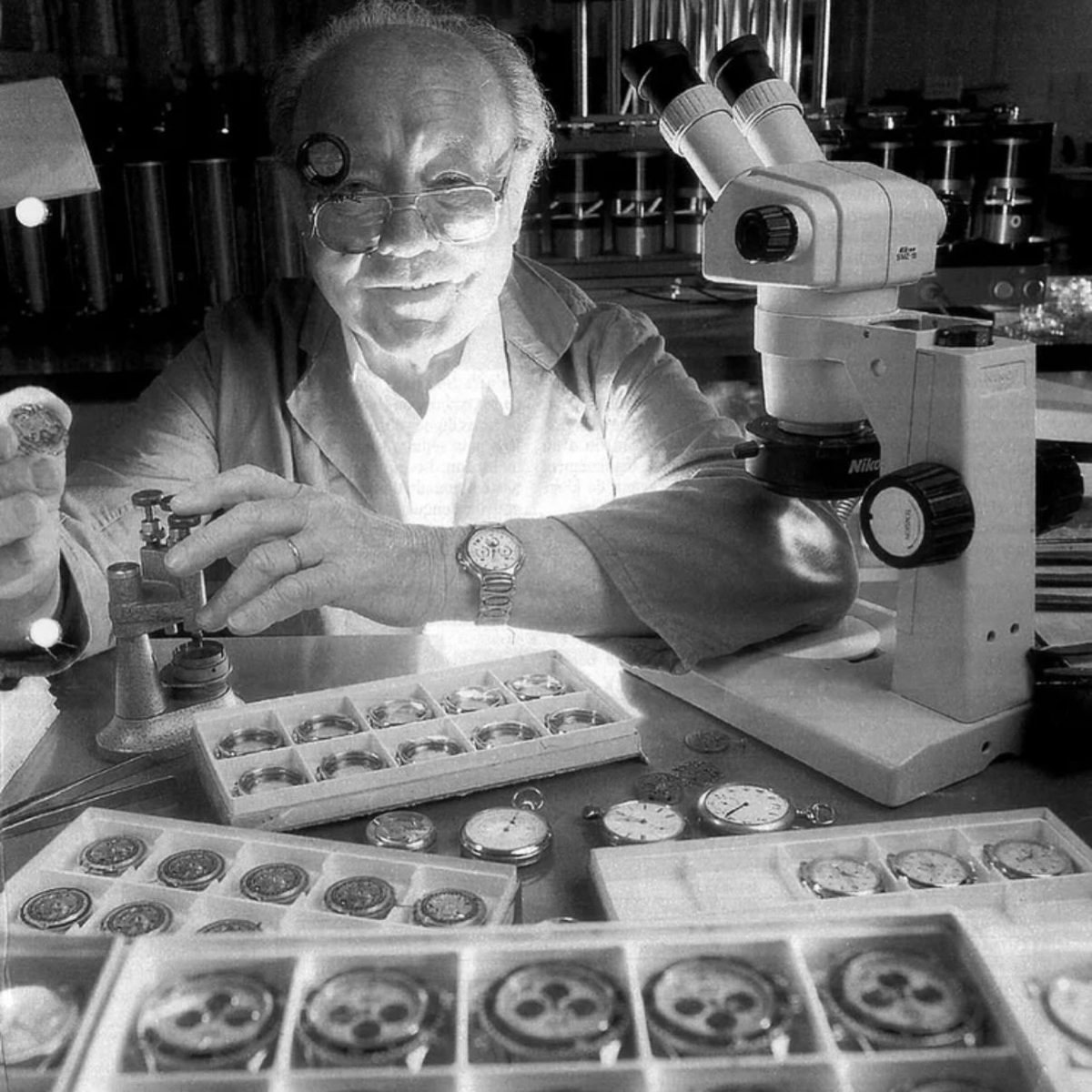
Some watch stories are about designers or racing drivers. This one is about a man who refused to throw things away. Without Charles Vermot, a Zenith watchmaker, the El Primero chronograph might have ended in the 1970s, and the Rolex Daytona of the late 1980s would have needed a different engine.
Our Instagram post told the story with a few numbers that the sources do not support. Here it is again, checked.
The movement worth saving
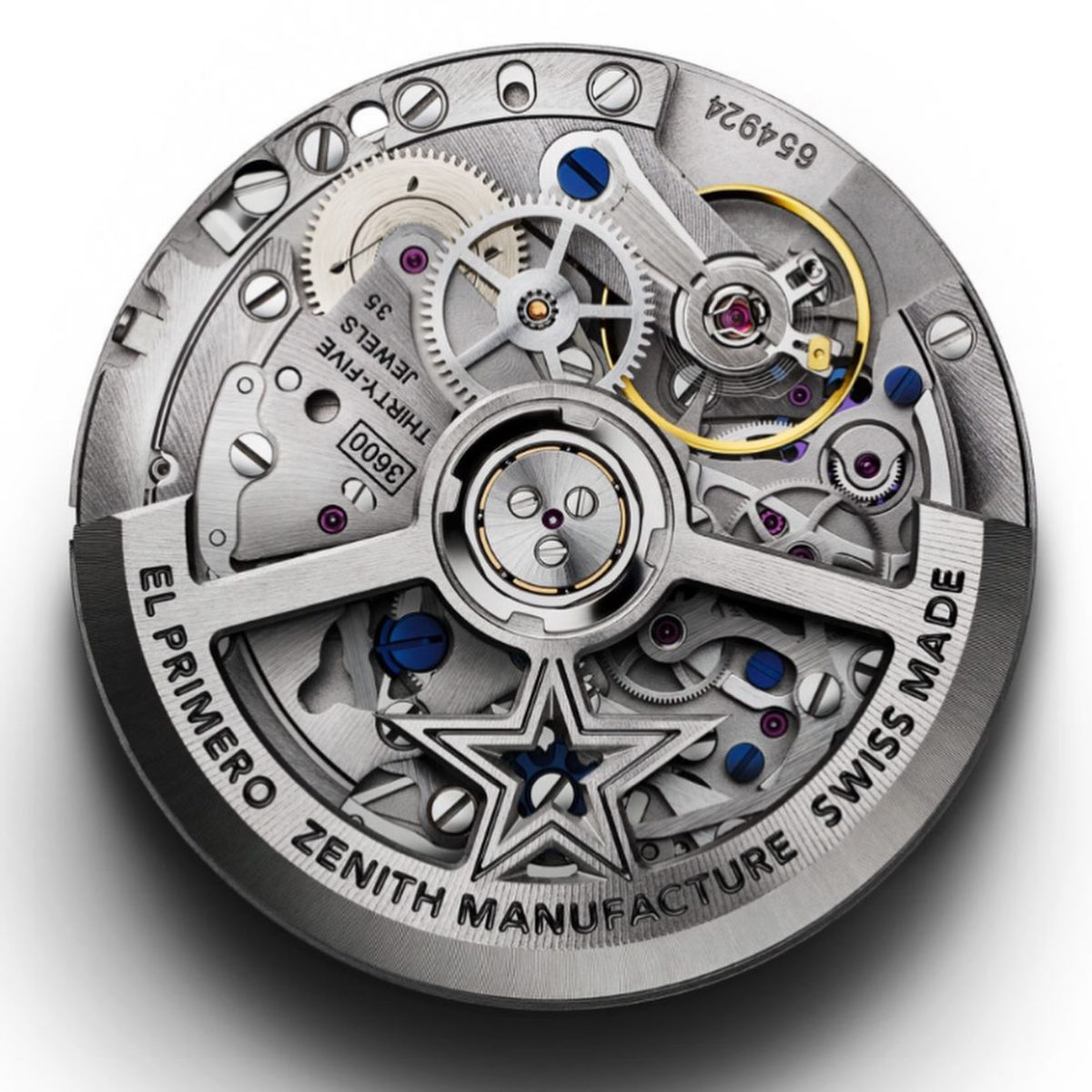
Zenith started work on an automatic chronograph in 1962, hoping to present it for the brand's centenary in 1965. It missed that date by four years. The calibre 3019 PHC, renamed El Primero, was unveiled on 10 January 1969, according to Monochrome. The first watches reached the shops later that year.
What made it special was the combination, all in one integrated movement:
- Automatic winding and a date.
- A column wheel to control the chronograph.
- 36,000 vibrations per hour, fast enough to time events to a tenth of a second.
- A thickness of only 6.5 mm.
The 1969 race, without a single winner
Zenith was not alone. On 3 March 1969, Heuer, Breitling, Hamilton-Büren and Dépraz presented the Chronomatic, or Calibre 11: a micro-rotor movement with a chronograph module on top, running at 19,800 vibrations per hour. In Japan, Seiko launched the calibre 6139, also integrated with a column wheel, at 21,600. Gear Patrol notes that Seiko was selling its watch months before the Swiss.
So who was first? Zenith announced first, Seiko sold first, and the Chronomatic group has its own claim. Watch writers still argue about it. What nobody disputes is that the El Primero was the fastest-beating of the three.
The order to sell everything
The El Primero was never made in large numbers. Monochrome puts production at roughly 1,000 to 4,500 pieces per model. Our post gave a total of about 32,000 movements for 1969-1975; we could not find that figure in a source we trust, so we leave it out.
In 1971 Zenith was bought by the Zenith Radio Corporation of Chicago, a company that only shared the name. The new owners bet on quartz. In 1975, say Monochrome and Hodinkee Japan, mechanical movement production stopped, and the presses and tools were to be sold off by the ton. Europa Star dates the decision to 1972 and Phillips dates Vermot's rescue to 1976, so the exact years vary by source.
What Vermot did
Sources describe his job slightly differently: head of the chronograph movement workshop for Europa Star, head of development for the El Primero's ébauches department for Phillips. Monochrome says the chronograph took about 2,000 operations to assemble, not the 2,500 our post claimed. We found no source for the "Workshop 4" name either.
According to Monochrome, Vermot asked to keep the tooling and got no answer. So, with his brother Maurice, he moved it at night: through a passage at the back of the building and up about 50 steps to an isolated storeroom on the top floor. Our post said 52 steps; the sources only say about 50. In six months they saved around 150 presses, plus cams, cutting tools and the manufacturing plans, and Vermot built a wall to hide them. Europa Star says each press was worth some CHF 40,000 at the time. Hodinkee Japan adds that he left a binder with instructions and labelled parts, so everything could be put back together.
The Rolex chapter
In 1978 Zenith returned to Swiss owners. When mechanical watches came back into favour, the company needed what Vermot had hidden. Monochrome reports that Ebel's president, Pierre-Alain Blum, first used unfinished El Primero movements, and that Rolex then looked at the calibre to modernise the Daytona.
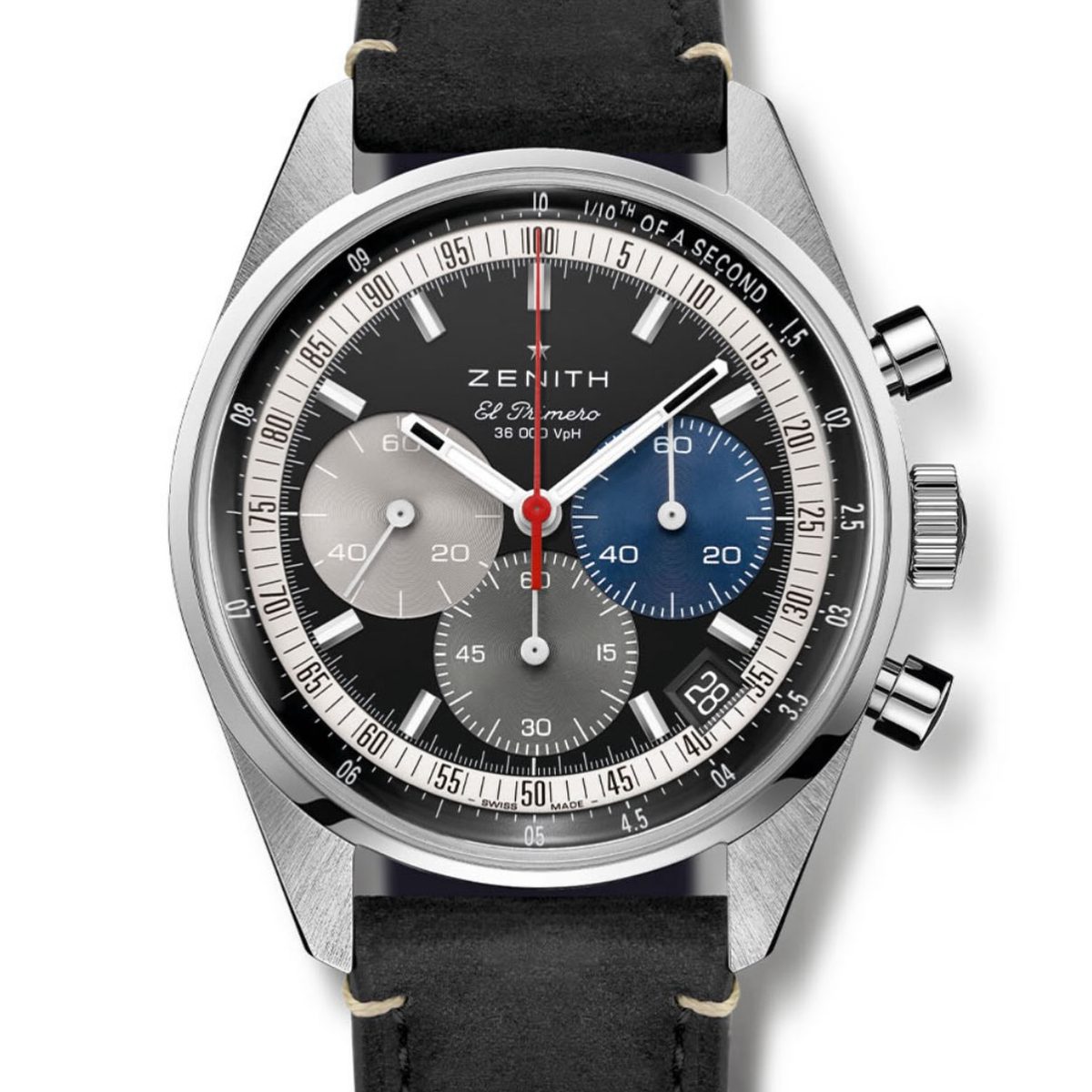
In 1984 Zenith restarted production of mechanical movement parts with the saved tooling and signed a ten-year contract with Rolex, according to Monochrome. Hodinkee Japan puts its value at about CHF 7 million. In 1988 Rolex unveiled the Daytona reference 16520 with the calibre 4030, an El Primero modified about 200 times: no date, a Glucydur balance, a Breguet overcoil and the frequency cut to 28,800 vibrations per hour. Rolex replaced it with its own calibre 4130 in 2000. Our article on the "Paul Newman" Daytona covers the rest of that model's history.
Our take
The El Primero is a great movement, but its survival came down to one stubborn employee and a storeroom nobody checked. Some details of the story have grown with each telling, which is why we stick to what the sources agree on.
The lesson for collectors is simple: a watch's value often rests on decisions made far from the dial. The El Primero is still in production more than 50 years later, and that is partly thanks to Vermot.
Sources
Every fact in this article comes from the sources below. Spotted a mistake? Tell us on Instagram.
- Monochrome Watches: In-Depth: The History of the Zenith El Primero, The Glorious High-Frequency Automatic Chronograph That Almost Died (opens in a new tab)
- Monochrome Watches: The Zenith El Primero – Revisiting One of The Most Iconic Movements Ever (opens in a new tab)
- Europa Star: The watchmaker who saved Zenith from oblivion (opens in a new tab)
- Phillips: Five Key Dates: The Zenith El Primero (opens in a new tab)
- Hodinkee Japan: The Story of Charles Vermot, the Man Who Saved the El Primero (and Possibly Zenith) (opens in a new tab)
- WorldTempus: Charles Vermot (opens in a new tab)
- Time+Tide: Why the Zenith El Primero is the numero uno among Swiss chronographs (opens in a new tab)
- Monochrome Watches: The History of the Iconic Calibre 11 (and its Evolution) (opens in a new tab)
- Gear Patrol: 1969 Was a Watershed Year in Watches (opens in a new tab)
- SJX Watches: Zenith Introduces the Next-Generation El Primero A386 (opens in a new tab)