Heuer Monaco: the square chronograph that raced, starred and never went away
Launched in 1969 with one of the first automatic chronograph movements, made famous by Steve McQueen and revived on television by Breaking Bad. Here is what is true in the Monaco legend, and what needs a footnote.
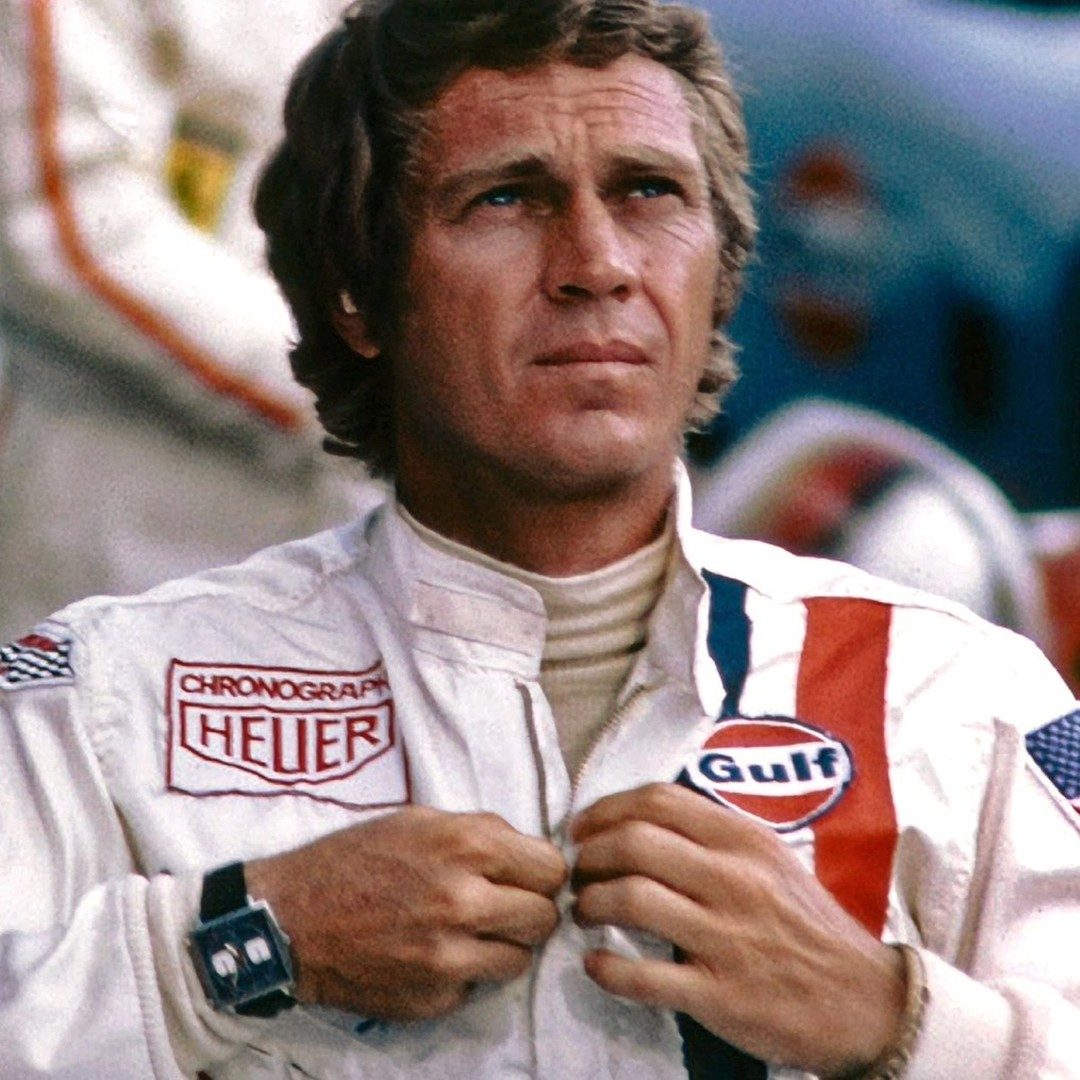
Few watches look as little like a watch as the Heuer Monaco. In 1969 a chronograph was round, and a square case belonged on a dress watch. The Monaco put a racing chronograph inside a square, water-resistant case, and more than fifty years later it is still in the catalogue.
Its fame rests on three stories: a new movement, a film star and, much later, a television drama. Each one is mostly true. Each one also needs a footnote.
A movement built by rivals
In the mid-1960s nobody sold an automatic chronograph. Heuer, Breitling, the movement maker Büren (later bought by Hamilton) and the chronograph specialist Dubois-Dépraz decided to build one together. Their agreement was signed in February 1966 and the work ran under the code name Project 99.
The result was the Calibre 11, also called the Chronomatic: a chronograph and an automatic, in one word. It was a modular design, with a chronograph module on top of a thin Büren base wound by a micro-rotor. On 3 March 1969 the group presented it at the same time in Geneva and New York, and about a month later the first watches were shown at the Basel fair.
Heuer launched three models with it: the Carrera, the Autavia and the new Monaco.
Was it the first?
The Instagram post says Heuer launched "the first automatic chronograph". That is the claim the brand has always made, but 1969 was a three-way race:
- Zenith presented its El Primero at a press conference in January 1969, two months before the Chronomatic.
- Heuer and partners presented the Calibre 11 on 3 March 1969.
- Seiko's calibre 6139 was, by several accounts, on sale in Japan around May 1969, possibly before either Swiss rival had watches in shops.
Who was "first" depends on whether you count an announcement, a working movement or a watch on sale, and the people who were there still disagreed decades later. We would call it a shared first.
Square, water-resistant, crown on the left
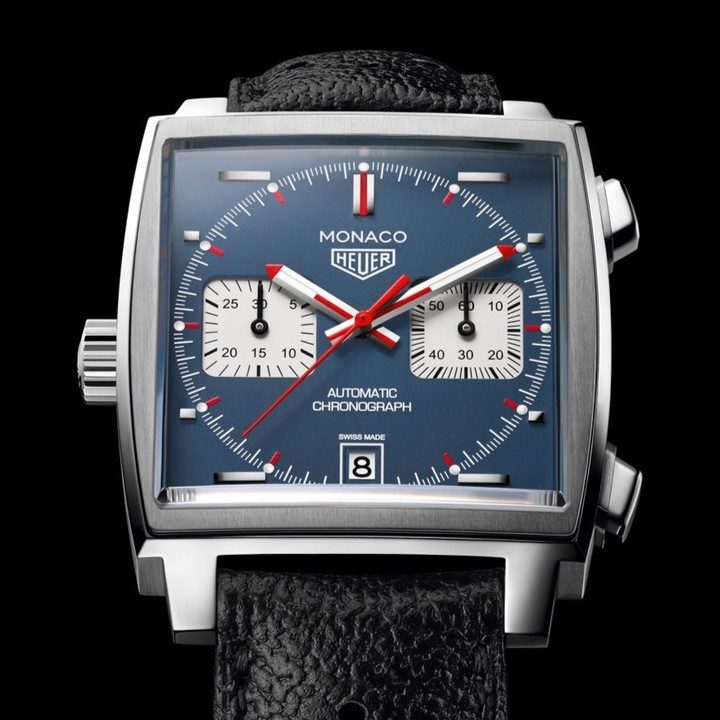
The case was made by Piquerez, a 39 mm square in brushed and polished steel. WorldTempus describes the Monaco as the first water-resistant watch with a square case; Time+Tide calls it the first square automatic chronograph. Both are defensible. The wording in the original post, "first waterproof square chronograph automatic", mixes the two.
The crown sits on the left, opposite the pushers. It was the visible sign of the Calibre 11, shared by every watch built on it. The post quotes an advertising line saying the crown was moved to remind owners that the watch did not need winding. We could not find that line in a source we could check, so we leave it out.
The name came from the Monaco Grand Prix, one of the best-known races on the calendar. The launch references were the 1133B, with a blue dial, and the 1133G, in grey.
How Steve McQueen ended up wearing it
The Monaco was not a hit at first. What changed that was Le Mans, shot in 1970 and released in 1971, with Steve McQueen as a racing driver.
McQueen did not arrive with the watch. Accounts agree on two pieces. First, the Swiss driver Jo Siffert, a Heuer ambassador, was close to the production, and McQueen's racing overalls copied Siffert's, Heuer patch included. Second, the film's property master, Don Nunley, laid out several watches for him and suggested the Monaco. Worn & Wound adds that McQueen turned down an Omega Speedmaster. Which of these mattered most depends on who tells the story.
An invoice dated 26 June 1970 shows what Heuer sent: 20 automatic chronographs, of which 9 were Monacos, 6 of them blue 1133Bs. McQueen gave one to his chief mechanic, Haig Alltounian, with an engraved caseback. That watch sold at Phillips in New York on 12 December 2020 for $2,208,000 with fees, a record for a Heuer. Another set watch had sold in 2012 for about $800,000.
The Breaking Bad watch
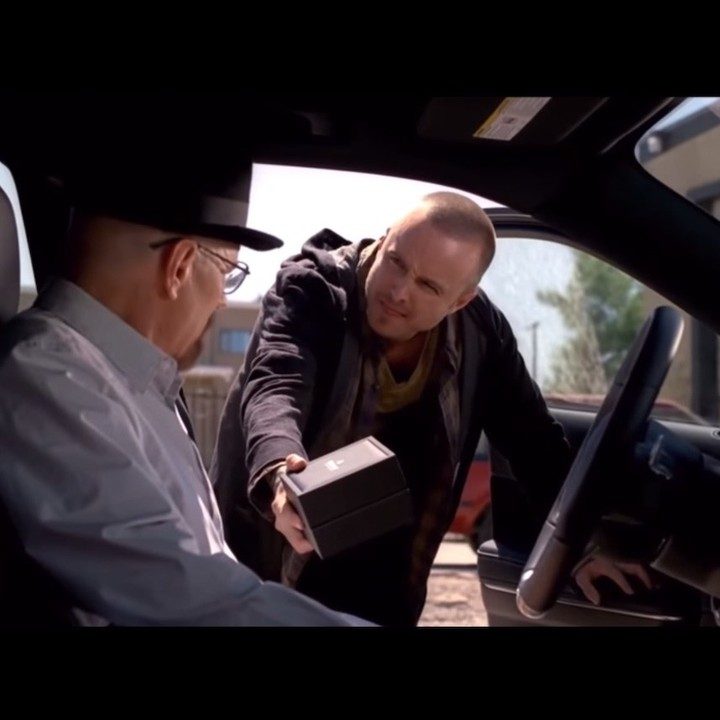
The Monaco came back to popular culture in the 2012 episode "Fifty-One" of Breaking Bad, season 5, episode 4. Jesse Pinkman gives Walter White a watch for his 51st birthday, not his 50th as the post says.
It was not a 1969 Heuer either. aBlogtoWatch identified it as a modern TAG Heuer Monaco Calibre 12, ref. CAW2111.FC6183, with a blue dial. In the car, Walt does not seem to know what to make of it; later he shows it to Skyler. The post says he calls it the best present he received, which we could not confirm. Time+Tide reads the running chronograph hand as time running out for him.
The Monaco today
TAG Heuer still makes the Monaco, including a 39 mm Calibre 11 model with the blue dial and left-hand crown of the McQueen watch (ref. CAW211P.FC6356).
Our take
The Monaco's legend is bigger than any single fact in it. It was probably not the first automatic chronograph on sale, and McQueen wore it partly because a prop man suggested it. None of that changes what it did: it proved a sports chronograph could be square, and it has stayed recognisable for more than half a century. If you want one, decide first whether you want the history (a vintage 1133B, at collector prices) or the shape (a current model).
Sources
Every fact in this article comes from the sources below. Spotted a mistake? Tell us on Instagram.
- Worn & Wound: Chronography 14: 5 Decades of the Heuer Monaco (opens in a new tab)
- WorldTempus: 50 years of the TAG Heuer Monaco (opens in a new tab)
- Monochrome Watches: The History of the Iconic Calibre 11 (and its Evolution) (opens in a new tab)
- Monochrome Watches: It was 40 years ago… the first automatic chronograph (opens in a new tab)
- Time+Tide: TAG Heuer Monaco (The Icons) (opens in a new tab)
- OnTheDash: Anatomy of an Invoice: McQueen’s Monacos (opens in a new tab)
- OnTheDash: Don Nunley and the Heuer Monacos of Le Mans (opens in a new tab)
- Monochrome Watches: The Heuer Monaco Worn by Steve McQueen in 'Le Mans', To Be Auctioned by Phillips (opens in a new tab)
- aBlogtoWatch: Tag Heuer Monaco Watch On Walt White In Breaking Bad Show (opens in a new tab)
- Time+Tide: The five most important TAG Heuers on film (opens in a new tab)